AdventuresNW



Rising as always with the first glimmers of dawn, we wake to a scorching gale pushing us hard against the anchor, heeling us over with the heavier gusts. Tucked into a side channel of the Ugashik River, we have spent the night just inside the bar. Watching the strong tendrils of wind scurrying across our anchorage, I wonder what we will face today once outside. Bristol Bay fishermen are accustomed to tough weather, and of the five river systems that comprise the Bristol Bay sockeye salmon fishery, the Ugashik River hits the Bay farthest out on the Alaska Peninsula, more exposed to the Bering Sea’s famously nasty storms. The weather is part of the cost of doing business here. On a good year, our crew shares will more than compensate for the risks. For those with adventurous spirits, it’s a gamble hard to resist.
Does anyone know where the love of God goes, when the waves turn the minutes to hours?
—Gordon Lightfoot, “The Wreck of the Edmond Fitzgerald”
The Bristol Bay fishery is the largest wild salmon run on earth, drawing thousands of fishermen for a few short weeks of intense sockeye fishing each summer. Rimmed by a wide expanse of tundra, the terrain rises quickly into the heavily glaciated Aleutian Range farther inland. The rivers that pour down from these mountains flow through huge lakes in the tundra on their way to tidewater—perfect rearing habitat for sockeye, who have evolved to require such lakes during their first year of life, before they head out to sea.
Humans aren’t the only predators who lie in wait here for the sockeyes’ return. The largest brown bears in the world congregate along the rivers of the Alaska Peninsula, too, gaining their huge size from an almost limitless diet of salmon. These bears can reach twelve hundred pounds.
For thousands of years, Bristol Bay’s human fishermen were the Yup’ik Eskimo people, who still maintain villages around the Bay and still participate in the annual feast, the rivers bearing their tribal names: the Naknek, Kvichak, Nushagak, Egegik, and Ugashik. Just upstream from our anchorage is the Yup’ik village of Pilot Point, which for these few weeks each year plays host to an invading horde of non-Native fishermen—a modern-day Wild West shootout with the crowds of salmon gillnetters clustered near the mouths of the rivers. At the peak of the run in July, the more aggressive fishermen can plug their boats in a single tide, their nets “smoking” with sockeye from the moment they hit the water. Huge scores can be made. And big chances taken.
On this morning, the wind has an ominous quality, a dry and incisive gale, devoid of the rich rainforest fragrances I am accustomed to in the Tongass region of Southeast Alaska. In this state, more than twice the size of Texas, there are many different Alaskas. Bristol Bay and its relentless winds can feel bleak and barren compared to my home in Southeast. On the seaward side of our anchorage, the Bering Sea stretches west to Kamchatka, three hundred miles of unfettered wind funneling into the Bay. My stomach tightens at the thought of going out.
We pull anchor and head into the river, soon rounding Smokey Point into the main channel, the security of our anchorage a distant memory already. Here, the onshore gusts take off their gloves, and the sea kicks up fast. The river’s five-knot current, bearing its heavy sediment load from the mountains that gave it birth, collideshead-on with the gale. The result is a maelstrom even before we cross the bar. Some of the boats have remained behind at anchor, thinking better of going out, and that in itself is rare in this fishery. The peak of the run lasts only a few days, and one’s season can be made or lost in a single opening. So the choice to sit out a day of fishing is a costly one. I watch Andy, my skipper, closely for any signs that he may be thinking better of it, too. But Andy is hungry. This is his first season running a Bristol Bay gillnetter, and he has big payments to make. By the time we cross the bar into the wider bay, our thirty-two-foot gillnetter is being tossed like a cork in a witch’s cauldron.
We set our net along the shallow sandbars east of the river’s mouth, bracing ourselves against the cockpit to keep from being launched overboard. Soon, we are rewarded by salmon hitting the net in good numbers. But the wind continues to build. It is a searing gale now. We decide to start hauling early and are glad we do. The hydraulic net reel can barely outdo the intensity of the wind, which drives the boat fiercely away from the net, straining the hydraulics to their limit. Sharp swells rising up across the shallow sandbar pummel the boat, popping our net out of the fairlead stanchions, guiding it onto our reel. It takes all our strength each time to wrestle the net back inside the fairleads, only to have it pop out again. We are lucky to finally get the whole net back aboard.
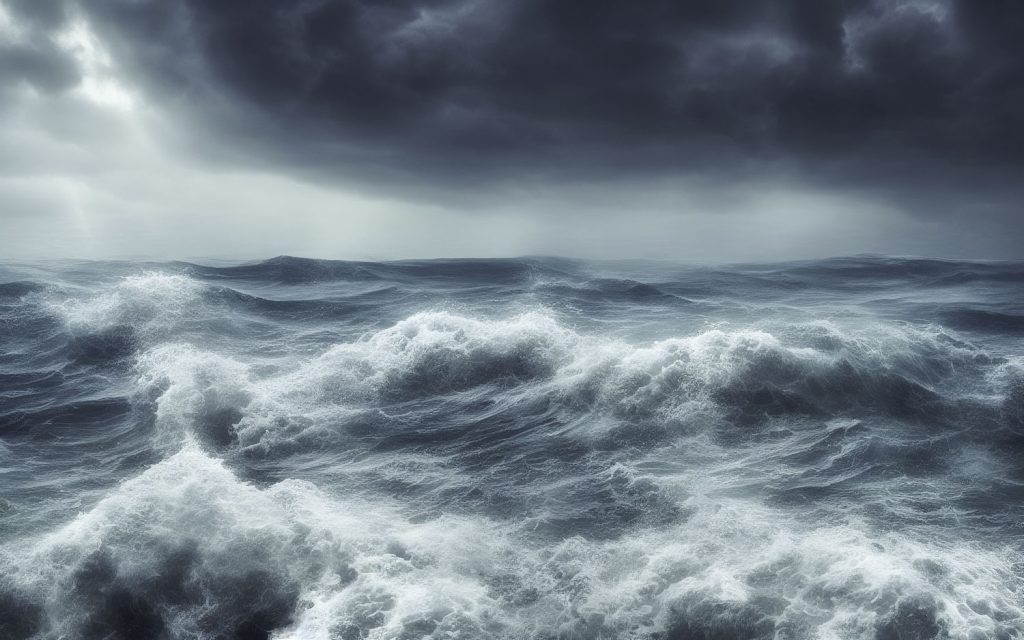
Even Andy is ready to call it a day now. He heads back toward the bar while we pick fish from the net and toss them into brailer bags in the fishhold below deck. The swells marching in from the Bering Sea have morphed into small mountains—long swells from the west, not the tight-cropped waves we usually contend with here.
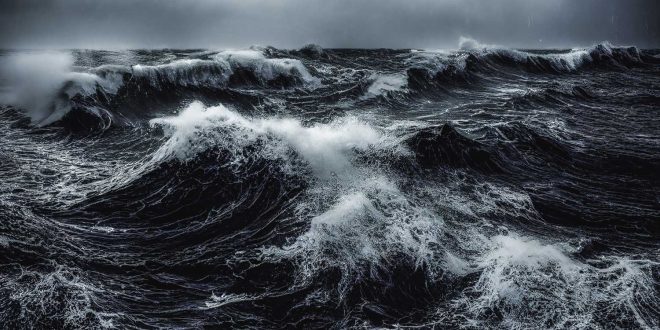
Our first clue that we may be in trouble comes when we round the bend and see the combers on the bar—steep, cresting waves that form when large ocean swells suddenly hit shallow water. The entire fleet of gillnetters is milling out in open water on the bar’s seaward side, and it’s soon obvious why. The swells rise up over the bar like giant teeth, breaking with a force that could easily capsize a small boat like ours. Bristol Bay has big tides with strong currents, and we are in the lower stages of that tide. Our best hope is to join the crowd of gillnetters idling into the swells, waiting for high tide.
At first, I feel a strange exhilaration being so close to the primal power of this storm. We are not yet in serious danger, and these thirty-two-foot gillnetters are surprisingly seaworthy. But as the swells keep growing, fear sets in. We are at the mercy of the ocean’s heightened fury now, with no place to hide. The nervous chatter on the VHF radio tries to make light of it, but all joking stops as the swells continue building. There is nothing we can do now but idle into the swells, scaling a steady progression of liquid mountains during our long wait for high tide and the added depth of water that might begin to tame these combers.
Minutes drag into hours, with no relenting of the gale, but finally, as peak tide approaches, one by one, the boats turn to make their run for it. We pull on our survival suits, staying outside on deck where we can keep a firm grip on the boat’s rigging and avoid becoming trapped inside. When Andy decides it is time to make a run for it, he guns the engine, hoping to maintain forward motion on the steepening slope of the swells, hoping we will not get jackknifed sideways and rolled into the sandbar like a toy. The first and biggest swell rises under us, and I feel the boat go slack. We are surfing now, teetering on the farthest edges of our boat’s steerage capacity. Deposited in the trough of the swell as it passes, we barely have time to regain forward steerage before a second swell lifts us, and we are barreling down its face to another wallowing pause in the trough. Then a third swell, then a fourth, each one slightly smaller than the one before.
We hang in that suspension between power and powerlessness for maybe only a minute or two. But it feels like an eternity. As the sea finally settles behind us in the deepening river channel, tension gives way to a flood of relief. We’ve made it! We look at each other, stunned, gazing across at other stunned crewmen on the boats that came in before us. Everyone’s face is ashen. Some are comrades we know well from our years of enduring other storms together. We offer subdued waves as we pass these boats now drifting idly or lying at anchor in the security of the river channel. The time for assessing the damage, for counting the heads, is still to come. One boat had its pilothouse windows blown out by a wave, all its electronics swamped. Two boats got rolled, we later learn, but amazingly, no one died.
This is not my first brush with death on the fishing grounds. Anyone who does this work for as many years as I have has similar stories, knows people who didn’t make it back across the bar, who weren’t rescued when their boats went down, or were simply never heard from again. These are stories we love to tell. But they are outnumbered by moments of beauty and awe. The wonder and terror cannot ultimately be separated. The stories we carry—powerful because they have been directly lived—are what keep us coming back. Sharing our stories and anticipations as we gear up for a new season or gather around the galley table during breaks in the fishing is a satisfaction hard to measure, and one that few fishermen would trade for the benefits of a more stable job back home.
There is something else, too, less easy to articulate, that has kept me coming back for so many years. It is an awareness built into my Zen practice as well. The notion that we can, or should try to, expunge risk from our lives is its own kind of mirage. We live in a profoundly risk-averse culture, and that flight from risk carries its own hidden dangers.
From my first days on the deck of a salmon seiner in Southeast Alaska, I felt a magnetism pulling me toward a different kind of life. I felt my constellations of life goals suddenly shifting. During those first summers in Alaska, the aspirations around who I was supposed to be, formed by my suburban upbringing, began unraveling and reconfiguring themselves. What Alaska offered me—what wildness in general offers—and what it asks of us, too, points toward a more ancient set of aspirations. Alaska calls out a part of our genetic heritage that modern life has attempted to vault us over. It can take a shock like this one in Ugashik to alert me to the fact that life was never supposed to be risk-free.
The choice to become a commercial fisherman, especially in a place with the extremes that Alaska dishes up, is a choice to live willingly with risk. Or more accurately, to revive a relationship with risk that we have fooled ourselves into thinking we can live without. It is a choice linked to our human hunger for emotional intensity, too. It’s why some people climb mountains, or skydive, or jump off bridges with bungee cords tied to their ankles; why some train to become astronauts or firefighters. It all flows out of that same hunger, bred into us from our deep evolutionary past. We feel most alive when the most is being asked of us, or when our life is most starkly on the line.
In truth, our lives are always on the line. It was never otherwise, and never supposed to be otherwise, a fact that we do our best to ignore. Humans are creatures who give birth and die, who are bound into the cycle of life and death together with all other creatures, never knowing in what instant, as Gary Snyder has said, “the table will be set around us.” Sometimes we are the hunters. Sometimes we are the prey. The line between the two has always been a thin one.
Cultures built around the hunt have long known this. Bound into that same human formula is a hunger for belonging within our tribe, and the need to prove ourselves worthy of such belonging. These are ancient hungers not easily dispensed with. They hark back to a time in our common human experience, not so long ago, when our life expectancy topped out at thirty, when physical dangers were ever present and not nearly as hypothetical as the abstract anxieties that prey upon us in our contemporary, urbanized lives.
That ancient thrill of the hunt is what captured my imagination during my first summers seining in Alaska. The thrill has always been in direct proportion to the risk taken on and to the bonds the hunt has always yielded. The strength of camaraderie in commercial fishing is strong precisely because of the shared risk built into it, the physical endurance, and sometimes raw courage that meeting those risks has required.
On the fishing grounds, everyone shares in that risk. And when the storms are most intense, one’s standing on the crew does not ride on résumés or titles behind one’s name. It does not rest on social background or political affiliations but on one’s capacity to meet moments of crisis with a blend of competence and courage. Perhaps it parallels the experience of soldiers on the battlefield, where one’s standing in the unit is earned in proportion to how well each person shows up in the heat of the battle. For me, it is an experience I have not encountered in the same way elsewhere, and one that I will always cherish.
Excerpted from Apprentice to the Wild by Kurt Hoelting (2025, Empty Bowl Press)
 Kurt Hoelting grew up by the Salish Sea, working summers in Alaska as a commercial fisherman and wilderness guide. A Zen practitioner, he founded Inside Passages in 1994, a sea kayaking guide company in SE Alaska, blending his love of wilderness exploration with an equal passion for exploring the “wild within.”