AdventuresNW



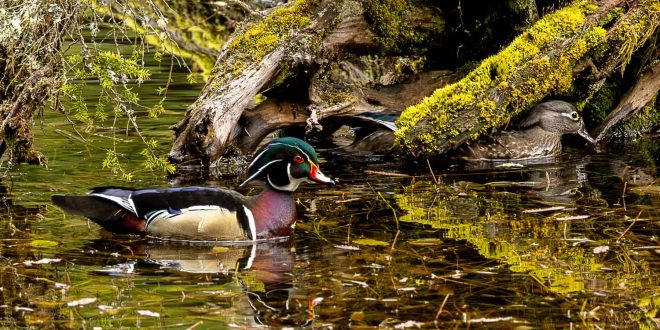
No Whatcom Land Trust (WLT) project has generated as many accolades or created so much enjoyment as the Stimpson Family Nature Reserve, assembled through generosity and community support.
When the Land Trust is trying to conserve a significant property, the challenge is usually to raise enough money. Here, the challenge was also daunting––how to encourage seven siblings to donate their childhood forest playground to WLT.
“We honored our parents’ legacy of giving to community. It was a joyful day.”
– Susan Trimingham
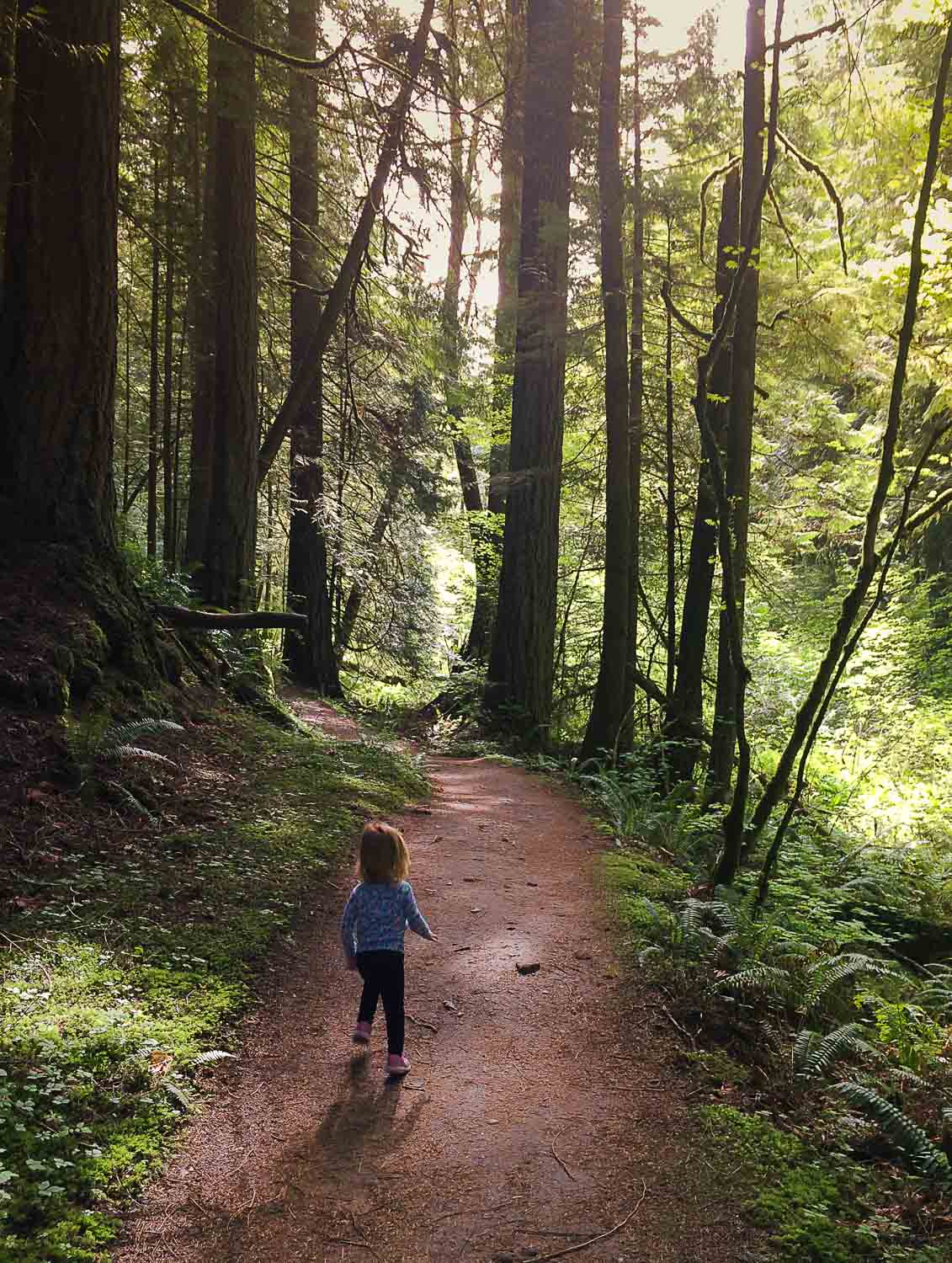
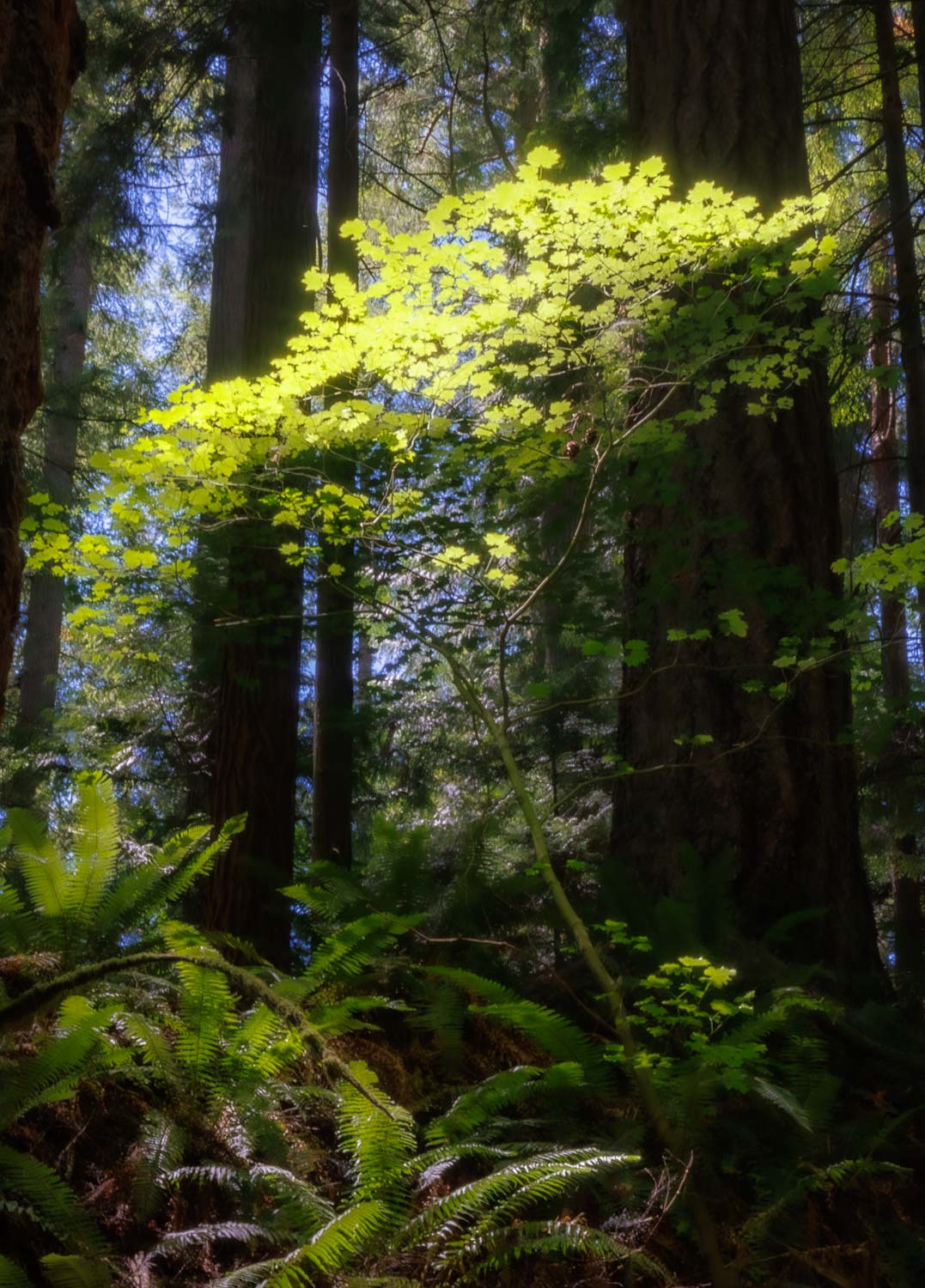
Glaciers and water sculpted the future Nature Reserve into a remarkable, compact landscape of geological and ecological features––bold sandstone folds and ridges separated by discrete ecosystems of wetlands, ponds, and streams. A mature forest of giant Douglas fir and red cedars and a richly varied understory cover the hills and swales. In season, the proliferation of flowering trillium is unrivaled. Animals large and small inhabit the space. From a hillside trail, a hiker watched two adolescent cougars sparring like kittens while the mom slept on a nearby alder log.
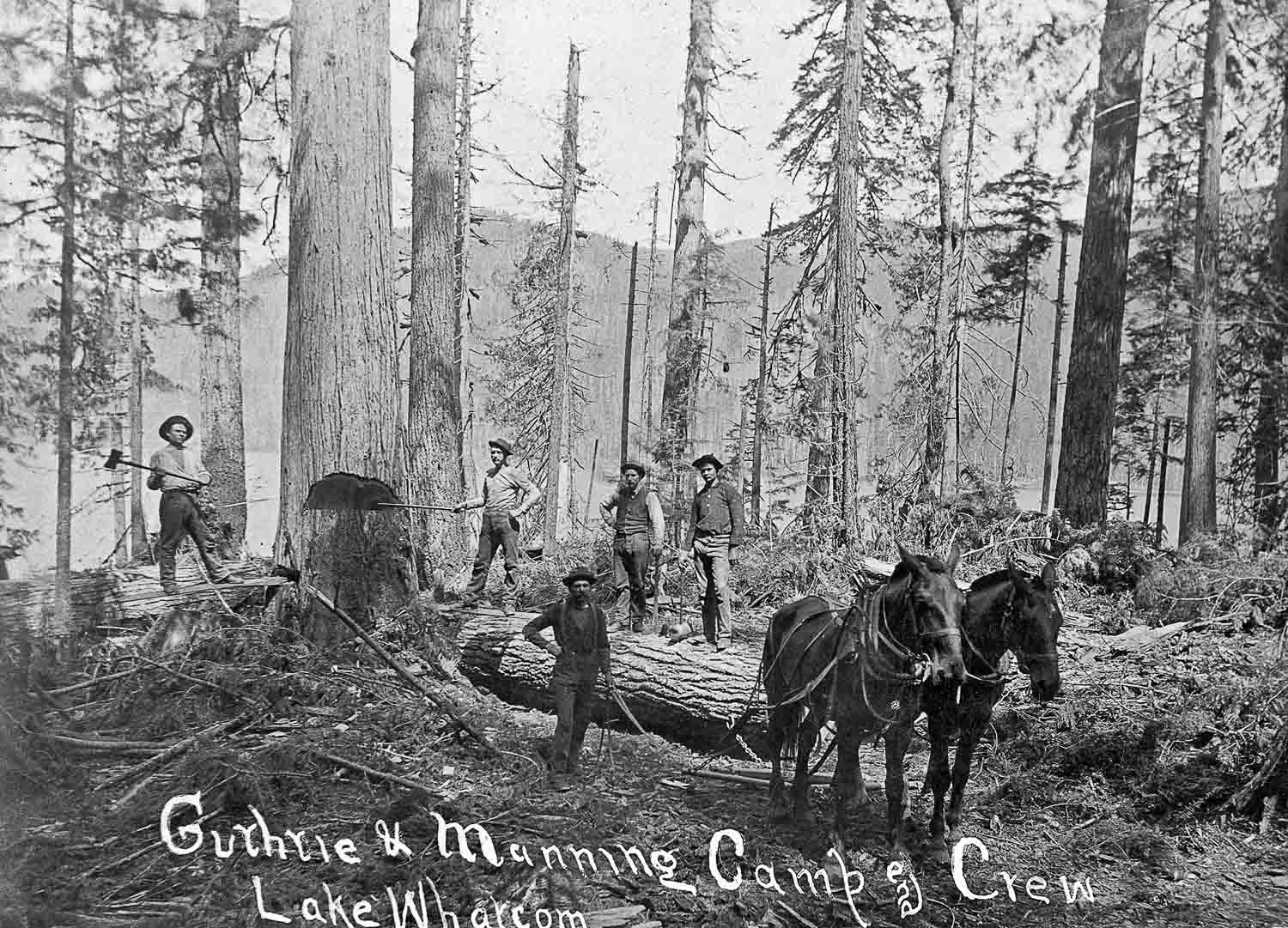
In the early 1900s, Catharine “Kitty” Stimpson’s father purchased a 136-acre timber tract known as Manning’s Camp from the Upright Timber Company.
Kitty and Dr. Edward Stimpson subsequently established a family ethos of broad and deep civic engagement–old–fashioned pillars of the community. Manning’s Camp became the playground for their seven children, where they learned to appreciate nature. When Kitty, Bellingham’s “Grand Dame,” died in 1998, the siblings inherited Manning Camp with a commitment that all seven would agree on what would become of it.
The siblings, Edward Stimpson, Catharine R. Stimpson, Mary Rivkin, Susan Trimingham, Jane Bremner, Caroline Macdonald, and John Stimpson, each found their own life’s path away from Bellingham. Their careers and life choices varied far and wide. However, they all deeply valued serving the community and Whatcom County’s extraordinary natural environment.
The family’s ideas about the fate of Manning’s Camp were divergent, including subdividing and developing; keeping it so that their children could thrive there; returning the property to Native Americans; and working with WLT to conserve the nature of the land.
In March of 2000, Susan and her brother Edward invited me to visit the family property and talk about conservation possibilities. At that meeting, I learned important information that would guide my thinking in the coming months. With Kitty gone, Ed was now the acknowledged head of the family. He was deeply concerned that, in keeping with family tradition, the future of this heritage property would be a source of pride for the Stimpson family. I understood that we had to formulate an impressive plan for the property and convince Ed that we could make it happen. I also saw that Susan would be a key player. She was highly regarded in Bellingham, knew WLT, and was socially well connected.
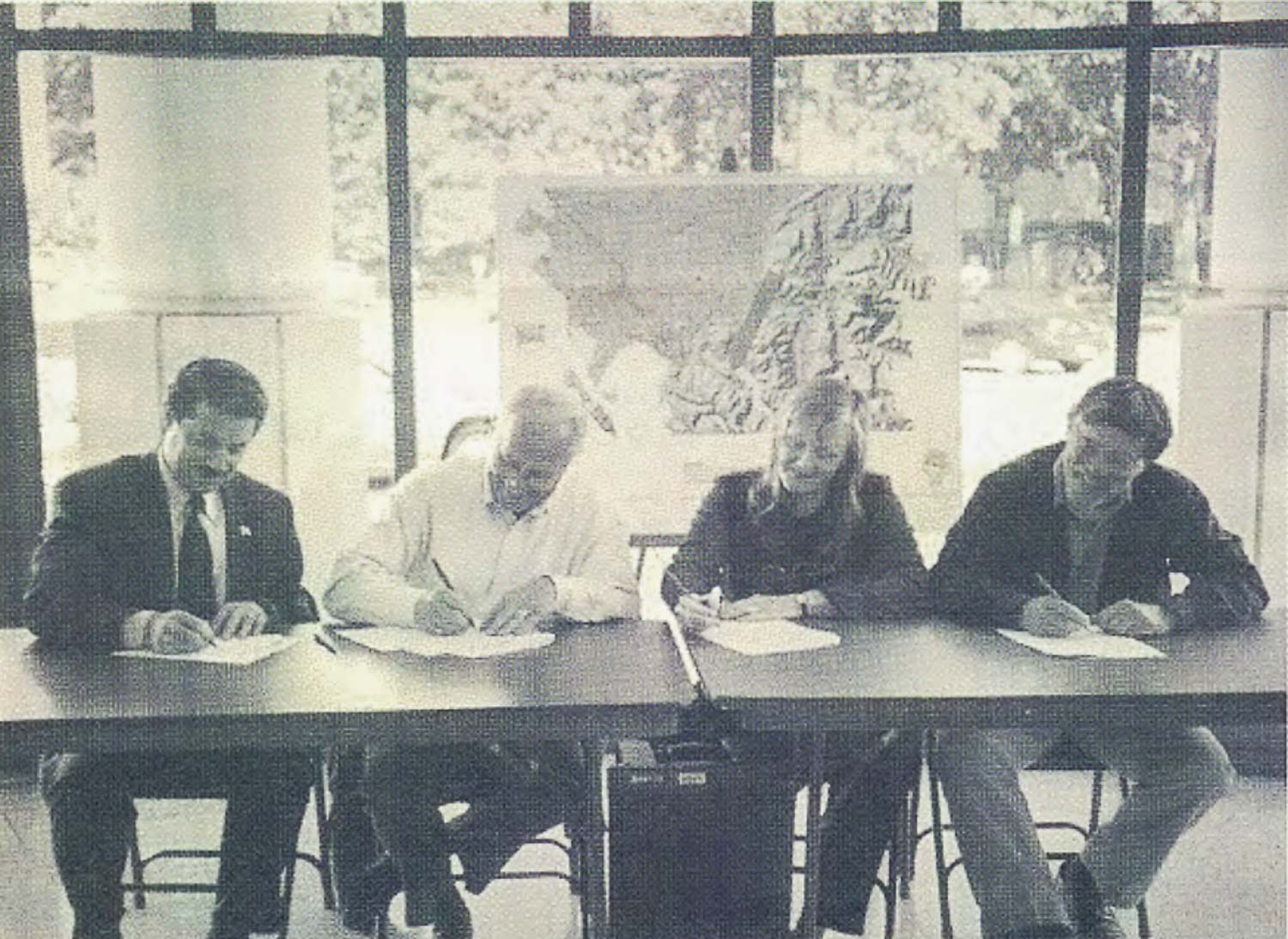
Working with my fellow WLT board member Bruce Smith and staff person Gordon Scott, we began assembling the pieces of a conservation plan. By fall, the plan for the property appeared both substantial and achievable. Talks between WLT and the family continued. Susan helped convince the others that they could depend upon the Land Trust and that the community would welcome the outcome. After many family discussions, emails, and calls, the seven siblings agreed to gift 116 acres of Manning’s Camp to WLT, holding back 20 acres of the 136-acre property for family use. Conditions of the gift were that it be used not as a park but as a nature reserve, a place for the quiet contemplation and enjoyment of nature, and that WLT would retain ownership.
Eight months later, in November 2000, Trillium Corporation agreed to sell WLT an adjoining 80 forested acres between the Stimpson property and Lake Whatcom for $450,000, significantly below fair market value. The purchase brought the fledgling Nature Reserve, with a market value of $1.5 million, to 196 acres.
That same November, led by County Executive Pete Kremen, Whatcom County agreed to purchase two easements on the land for $500,000––an easement to protect Lake Whatcom water quality and a recreational use easement to create an exceptional public recreation opportunity. Practically speaking, for $500,000, the County acquired all the benefits it wanted. The County and WLT developed a management plan for a Reserve that would be owned by WLT and managed by the County. With the $500,000 received from the County, WLT paid expenses for developing the Nature Reserve, including trail building, established a fund of nearly $300,000 for future maintenance by the County, and helped pay for the 80 acres purchased from Trillium.
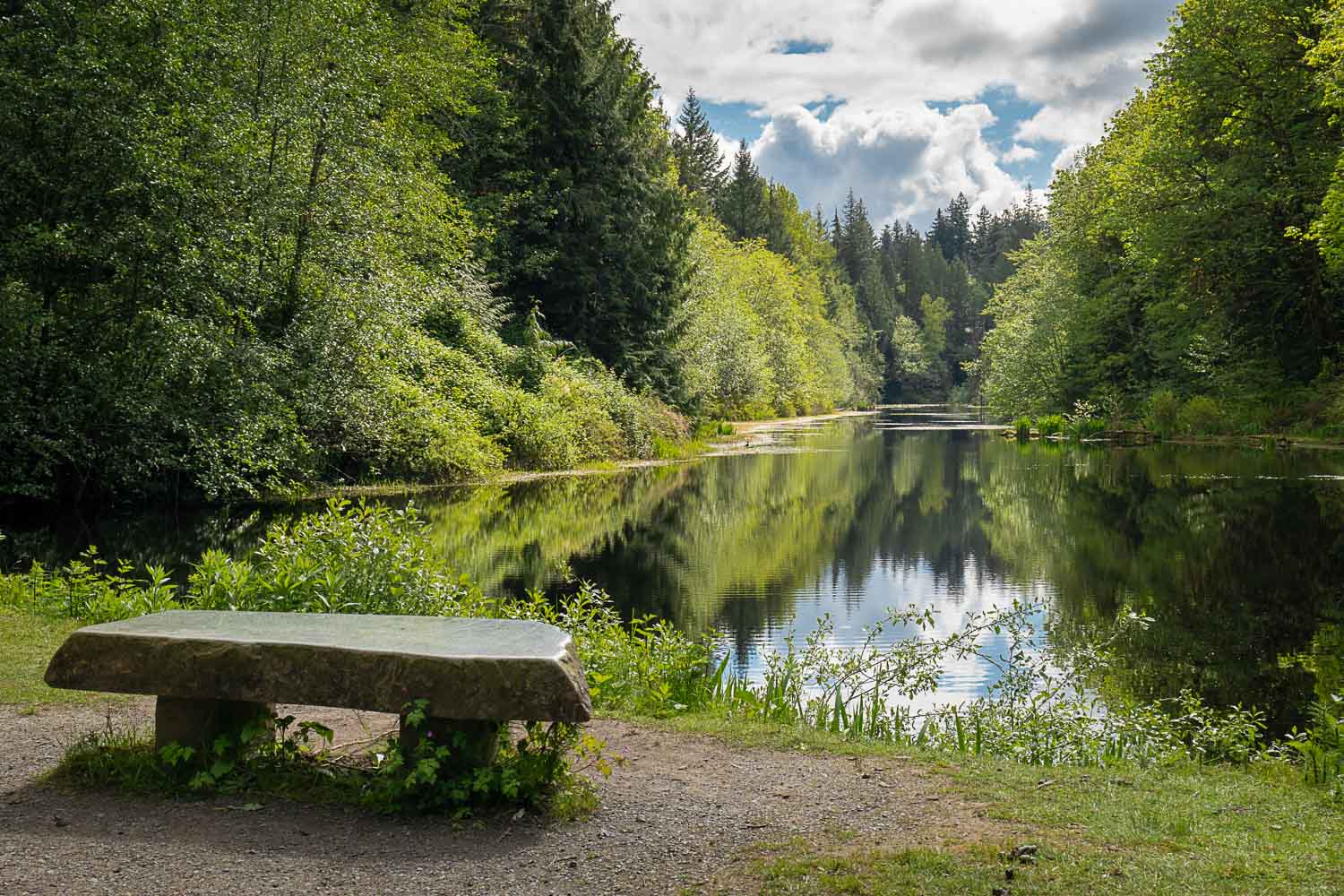
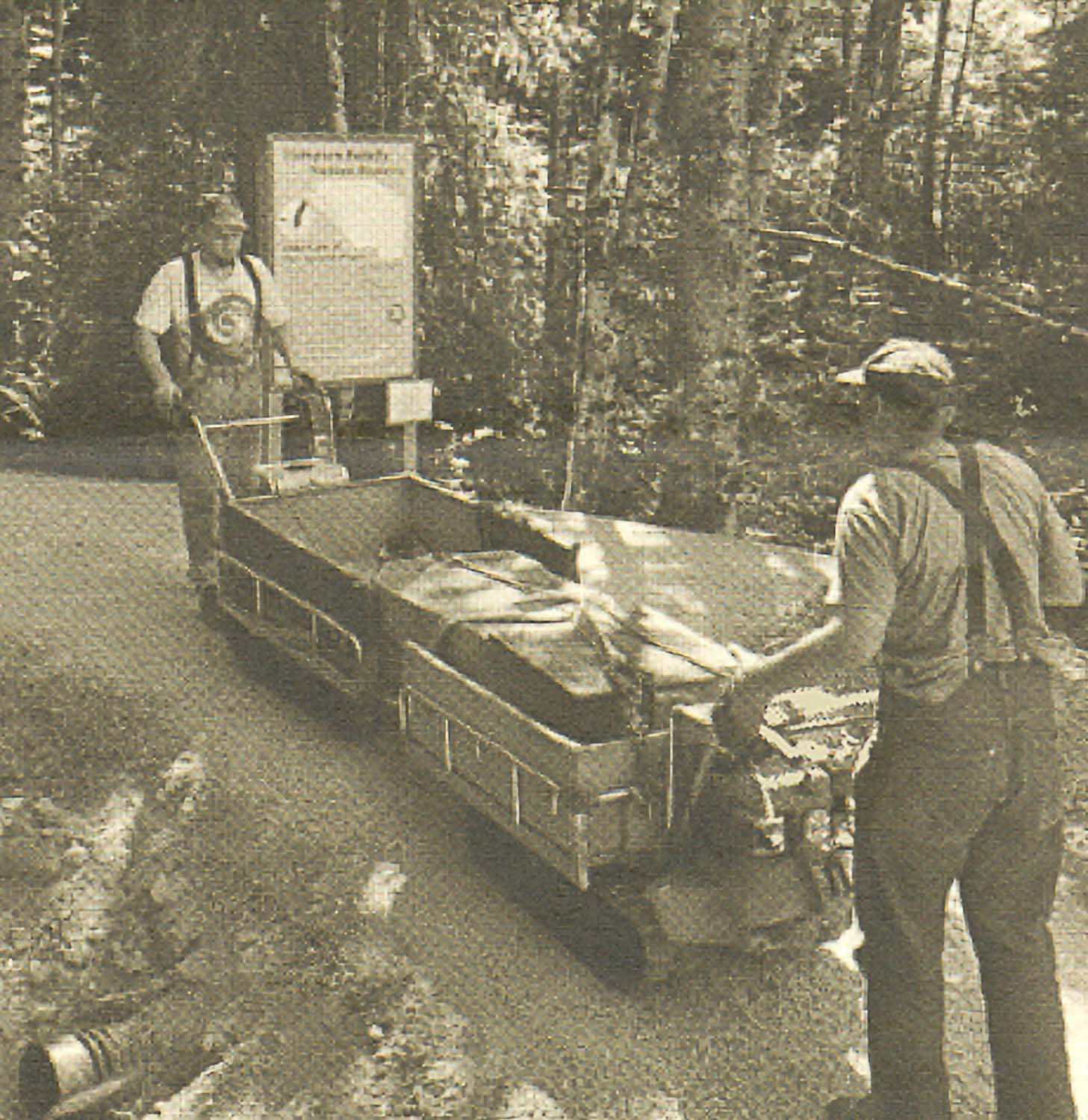
To access this wondrous landscape, master trail artisan Russ Pfeiffer-Hoyt carved a five-kilometer trail along sandstone ridges, through the forests, and down into watery troughs. Russ kindly oversaw Casey Oswald’s building of two trail bridges as part of his Eagle Scout project.
The Washington State Department of Natural Resources (DNR) owns the 138-acre Lake Louise Natural Resource Conservation Area (NRCA), which adjoins the Nature Reserve. State law protects the NRCA because of its “exceptional biological diversity, ranging from bogs and wetlands – including a large and very active beaver pond – to hardwood thickets and mixed conifer forests of Douglas-fir, western red cedar and western hemlock, some with old growth characteristics.” Three hundred species of fungi and slime molds have been identified here.
Serious negotiations with DNR regarding the NRCA got underway in 2002. In September of that year, DNR signed an agreement with Whatcom County to incorporate the NRCA into the Nature Reserve and turn management of the property over to Whatcom County, increasing the Stimpson Family Nature Reserve to 234 acres.
While negotiating with DNR, we discovered that the Stimpson donation did not include a critical 16-acre parcel that contained the Reserve parking lot, the trail running from the parking lot to the NRCA beaver pond, and the only feasible access to the Nature Reserve for logging and construction vehicles. Records showed that the 16 acres belonged to Western Washington University (WWU).
I went to see George Pierce, Western’s Vice President for University Facilities, explained our dilemma to him, and asked that the university give the property to WLT. George said that he knew nothing about the property and did not think WWU owned it. “What would we want with property way out there, miles away? But I’ll check.” The next day, George confirmed that Western did indeed own the property.
It turns out that many years earlier, legendary biology professor Herb Taylor had regularly taken his botany classes on field trips to what would become the Nature Reserve property. He became concerned that the property would be developed or logged. In days of less bureaucracy, he convinced the University to buy the 16 acres, effectively blocking commercial vehicles from accessing the botanical treasure trove and, in the process, preserving the potential for the present-day Nature Reserve.
WWU agreed to give the 16 acres to the Land Trust, expanding the Stimpson Family Nature Reserve to 350 acres.
On October 11, 2003, three generations of the Stimpson family gathered with supporters to commemorate their gift that had catalyzed a community partnership and celebrate the grand opening of the Stimpson Family Nature Reserve.
Recently I asked Susan Trimingham how the family felt that day. She replied: “The dedication of the Stimpson Family Nature Reserve was a celebration for my siblings and our families. We were so grateful to the Land Trust collaborating with Whatcom County and others in bringing our family vision to a reality. We now knew that this amazing land would be preserved and used by our communities forever. And we honored our parents’ legacy of giving to community. It was a joyful day.”
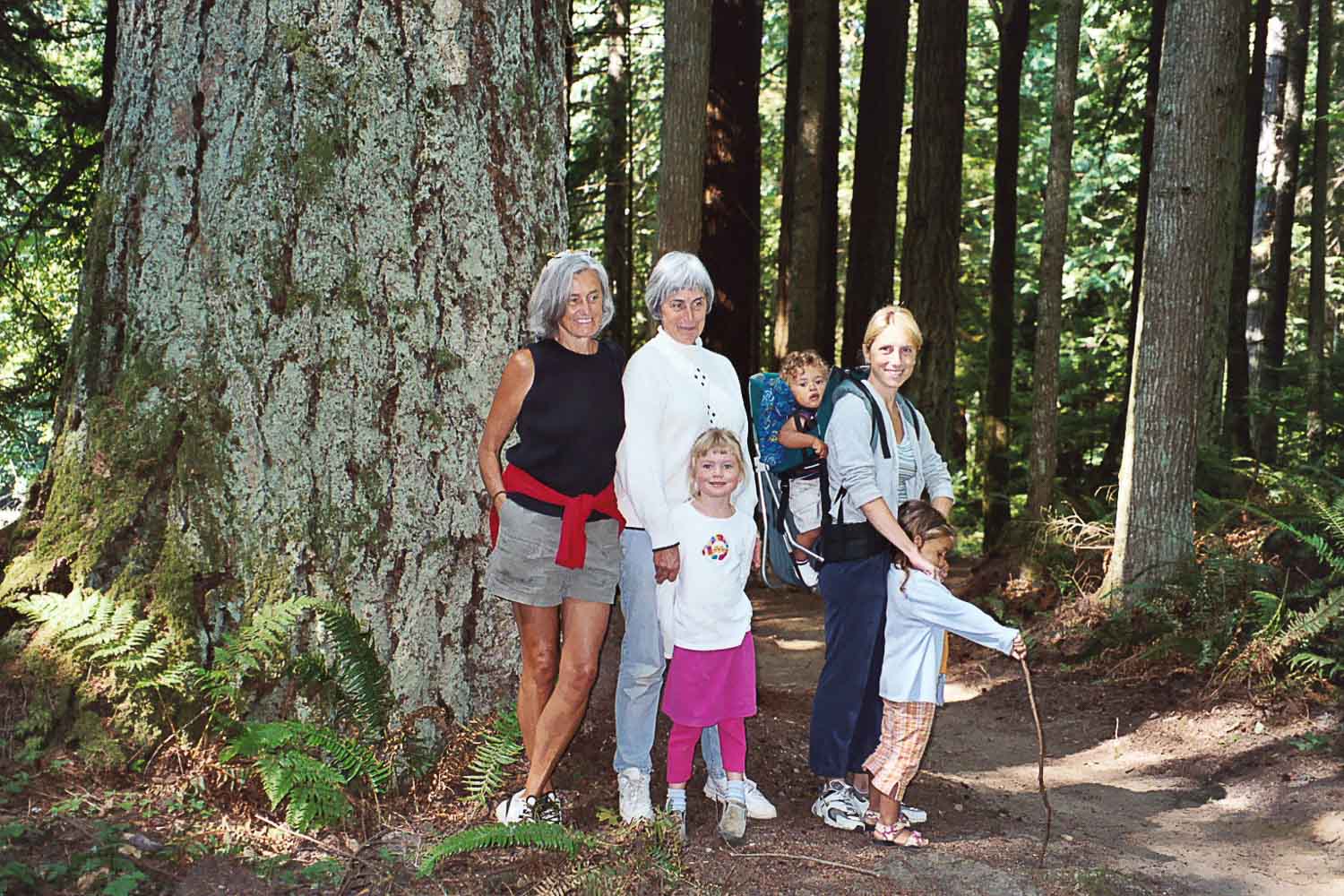
11th, 2003 to celebrate the grand opening of the Stimpson
Family Nature Reserve. (L-R): Jane Bremner, Susan Trimingham,
Maya Seckinger, Zo Dixon (in backpack), Erin Trimingham, and
Sophie Dixon. Photo courtesy Susan Trimingham.
After the kudos and thanks, everyone set off to be among the first to walk the Pfeiffer-Hoyt 5K trail. Despite recent hip surgery, Ed’s wife Dottie insisted on going too. As the hikers spread out on the trail, Ed and Dottie fell further and further behind. When the crowd re-gathered in the parking lot without Ed and Dottie, not a single person left. After 15 minutes or so, when they were sighted coming down the trail, everyone broke into spontaneous applause. The clapping did not stop until Dottie and Ed joined us.
In 2015, the Nature Reserve again expanded. The Stimpson Family donated the 20 acres of Manning’s Camp withheld from the original 116-acre gift, bringing the total acreage to 370 acres.
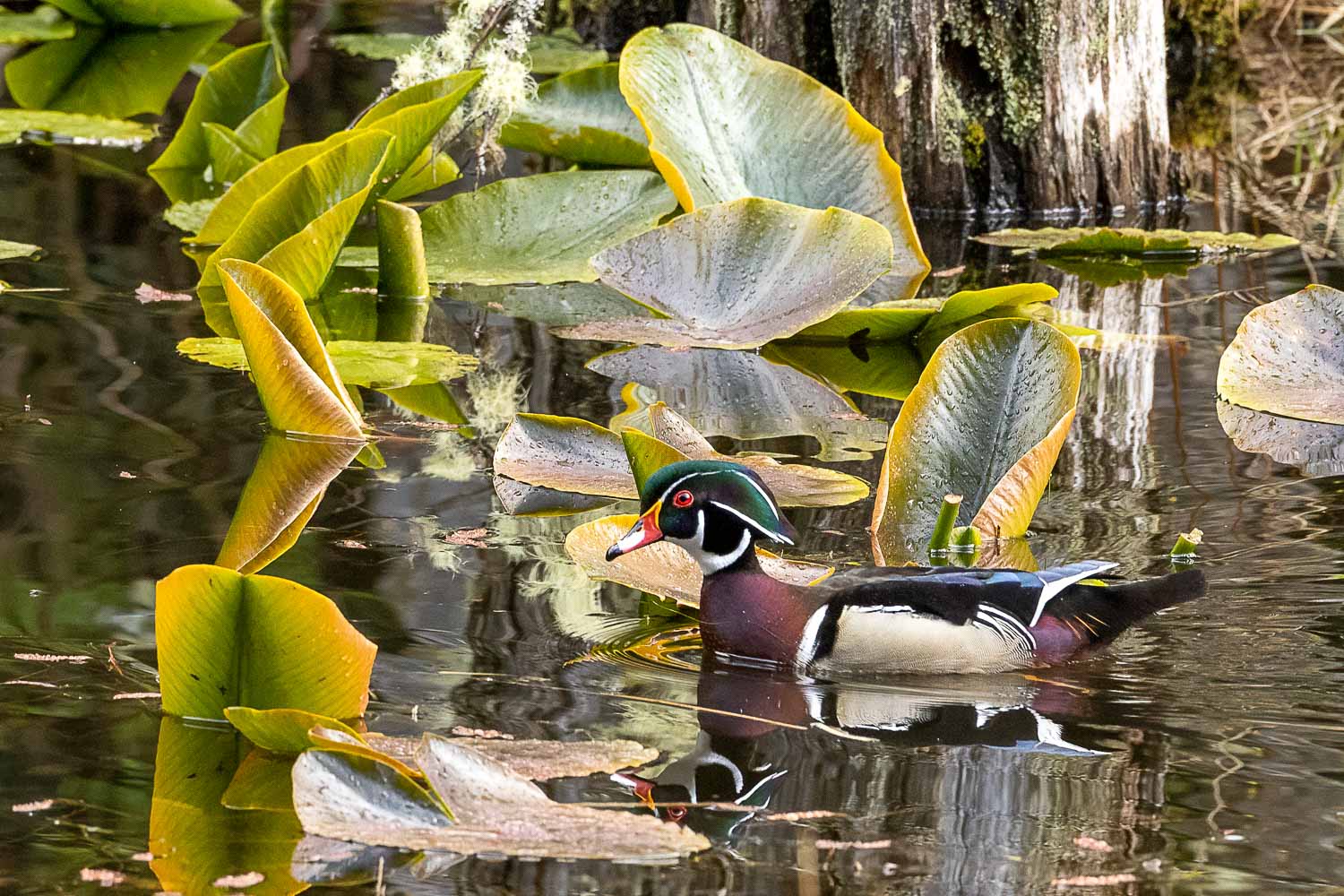
About the same time, Bellingham and Whatcom County, working with WLT, purchased an adjoining 34 acres, complete with a 5-acre pond. Russ extended the Stimpson trail to a loop around the pond, and the Reserve grew to 404 acres.
In a WLT newsletter announcing the Stimpson family gift, ardent Land Trust supporter Pat Karlberg looked to the future: “Bravo! The Stimpson name has been well known and highly respected in this community for decades. Now that name will be a household word into the next century and beyond.”
Die Like a Tree
by Lois Holub
Poet Lois Holub frequently travels from her home in the South Fork Nooksack Valley to find inspiration at the Stimpson Family Nature Reserve. She often sits on a tree and composes a poem there. Die Like a Tree captures one such moment.
Die Like a Tree
After she died, we piled my mother’s body
with all the things she might want
in the spirit world:
crossword puzzles, photos, a book, teabags,
her favorite slippers,
so they would turn to ash with her body
and join her on the other side.
Cremation after death is a thing in my family.
Generations placed in humble urns atop mantels,
sealed in pockets of marble columbarium,
or simply scattered to the winds at sea.
But lately I feel a wish, deep as physical longing,
to know I could die
like a tree dies.
A tree who dies in their deep forest
gets to stay in their forest,
still belongs to the forest,
continues to be part of all that life even in death.
So instead of scattered ashes in every favorite place,
my body could be set down in a forest somewhere,
far off any trail,
under cedar trees, and hemlock, and all kinds of maple.
Moths could kiss my eyelashes,
mushrooms blossom on my skin.
The ground could say hello to every cell,
and the ravens could make what I was
grow wings and fly.
And after the ravens are done,
let the worms and beetles take the rest
deeper into the forest floor,
under leaves and needles down under the duff,
down into the dark
so what carried me for so many years
can rise, free,
into green fern,
into elderberry;
so what I traveled in for so many years
can finally travel light,
through the roots of a growing cedar
into a new tree ring of time.
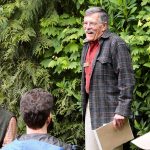 Rand Jack, Whatcom Land Trust board member, standing on a rock welcoming the crowd at the Stimpson Family Nature Reserve Grand Opening.
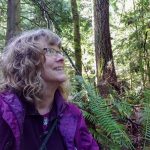 Lois Holub lives in Deming, Washington, on the traditional land of the Nuxwsa7aq people. During the first year of the pandemic, she began walking in an old-growth forest preserve several times a week. She continues this practice today. Her first poetry collection, The Next True Story of My Life, was published on her 60th birthday.