AdventuresNW



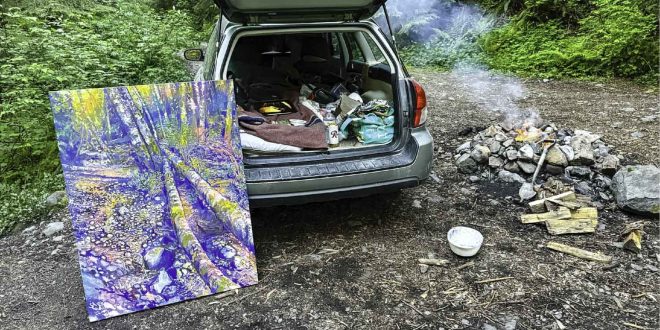
Golden light filters through a tapestry of branches, signaling the start of my workday. The environment shifts and breathes as the sun tracks across the sky. Capturing the shadow patterns, intense highlights, and immense textural detail of the Pacific Northwest mountains isn’t a “normal” painting experience—it is a physical confrontation.
We are rich in beauty, yet I feel most grounded when I turn toward the unseen—the difficult, the remote—to tell my story.
I begin feverishly, carving the first movements into the canvas. These early marks define the entire trajectory of the piece; the energy needs to be felt immediately. Today’s location sits atop a steep hill above a raging winter river, which I reached only after three full trips hauling supplies. This spot wasn’t my first choice—I had driven hours deeper into the mountains before turning back out of frustration, but mostly out of obligation to produce a full-scale 3×4-foot painting.
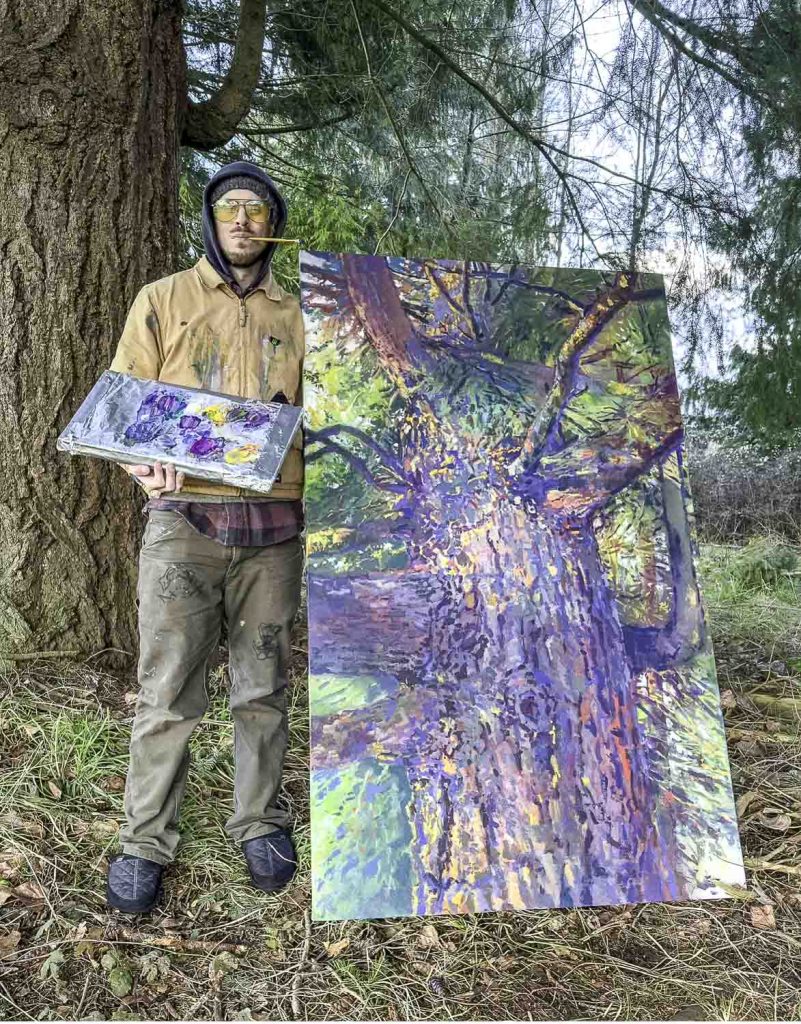 Five days of food and water, a cold van to sleep in, and a sun that disappears behind the ridge before 4 PM—time becomes the central adversary. The bite of mountain air forces urgency into my brushwork. Nothing is comfortable out here. But that discomfort is deliberate. I’m not just painting nature; I’m embedded in its friction.
The Evolution of the Mobile Studio
Reaching a point where I could operate as a mobile, off-grid painting studio took years. My obsession with off-roading and my obsession with art used to feel like separate lives until, after completing my graphic design degree, I finally carried an easel into the woods.
After countless experiments, vehicles, failures, and overnight trips, I discovered the minivan’s hidden potential: it is the most underrated wilderness living platform. Today, mine carries off-road tires, weeks of supplies, a raised interior floor, a 2200-watt battery, Starlink, stoves, coolers, tables, and enough layers to survive long winter nights.
I still do this cheaply—cheaper than most who attempt anything like it—but I’m more committed than most. In a region where homeownership feels unreachable, relying on public land and owning the vehicle I live in and work out of is liberating. Sleeping, painting, and existing in places where most people never set foot is a point of pride. The Skagit Valley and the Cascades offer vast stretches of untamed access, and I intend to use every inch of it.
Scale, Time, Materials, and the 40-Hour Response
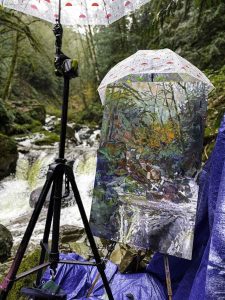 Scale is everything. A three-foot-tall canvas forces physicality into the process. Fighting the cold, wind, and sheer size of the scene injects an energy that small works simply can’t hold. My paintings are often described as overwhelming rather than peaceful—and that is intentional.
Painting over the course of a week means every shift of light, temperature, atmosphere, and river movement becomes layered into the piece. I’m not capturing a single moment; I’m building a composite of lived time. After forty hours, the painting becomes a response, not a decision. I rarely know what the piece will become until the environment dictates it.
My materials evolved out of necessity. Oils are impossible in a Northwest winter—one raindrop ruins the entire surface. Acrylics and acrylic-based spray paint became the only practical solution, but also the one that unlocked my style.
Spray paint carries cultural weight: street art, rebellion, immediacy. That energy is vital to my process. It dries instantly, allowing layered gradients, hard-edge shapes, and rapid shifts that traditional plein-air painters can’t achieve on location. The physical act of spraying color brings joy into the harshness of these trips, making the process feel both aggressive and free.
The Ghosts of Fish Town: A Call to the Raw Spirit
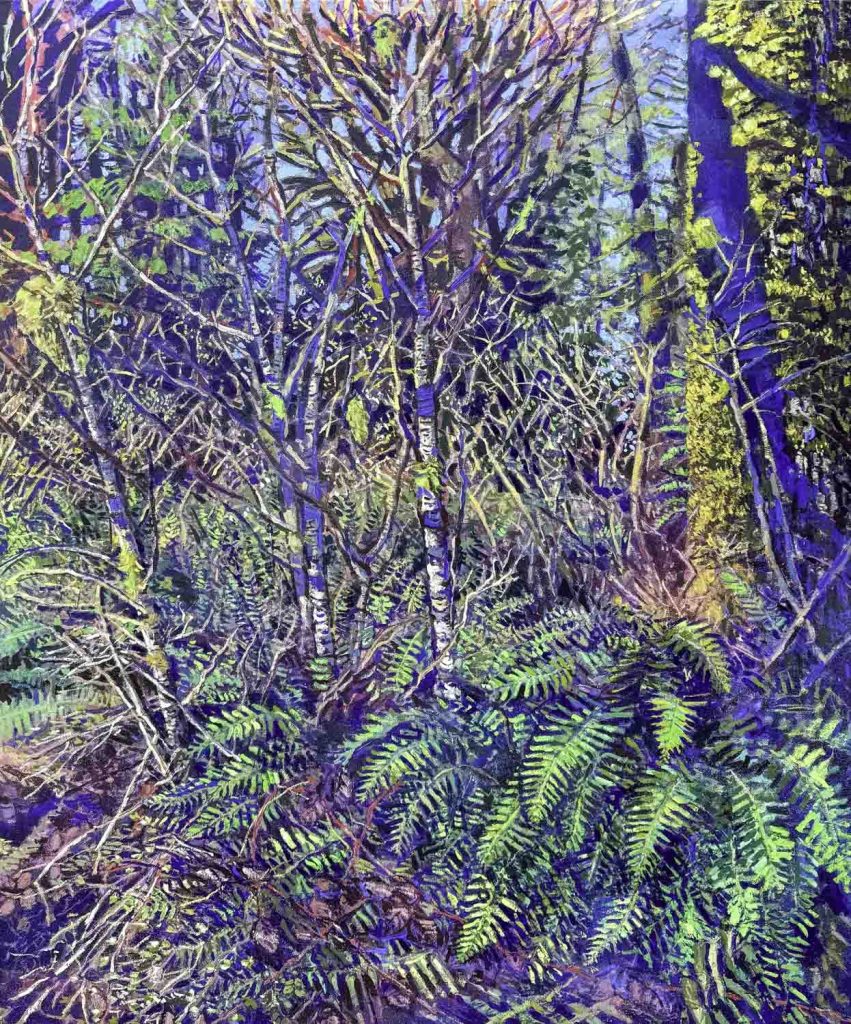
While my work is en plein air, my definition expands beyond the easel. The process begins days earlier as I inspect maps, scout BLM and DNR lands, navigate washouts, and sometimes drive six hours only to discover a road is closed. This difficulty is fundamental—nothing is staged or convenient.
The Skagit Valley holds a lineage of artists who didn’t just depict the land: they lived inside its tension.
Discovering the artists who worked in Fish Town from the 1960s through the 1980s changed my understanding of what an artist could be. I’ve since completed nearly a hundred works at Craft Island, the same tidal flats they once inhabited. They weren’t chasing a career—they built their entire existence around the land itself.
While separated by decades, I feel the same impulse they did: the need to live creativity, not perform it. Water, heat, comfort—these are luxuries you sacrifice when art becomes lifestyle. But for what I’m trying to create, that sacrifice feels necessary.
My goals moving forward remain simple. I intend to earn my living through this work—a path already forming through my relationship with Harris Harvey Gallery in Seattle and my search for a permanent gallery home within the Valley.
But my deeper hope is to revive a generational spirit that feels at risk. We have countless organizations and arts groups, yet many of them lean toward comfort, predictability, and safety. The mountains do not. The irony is that the very artists whose hardship built this region’s cultural legacy once lived here when land was cheap, government oversight was minimal, and no one cared what was built in the woods. Today, their legacy helped create a region where million-dollar properties overlook places they once lived for almost nothing.
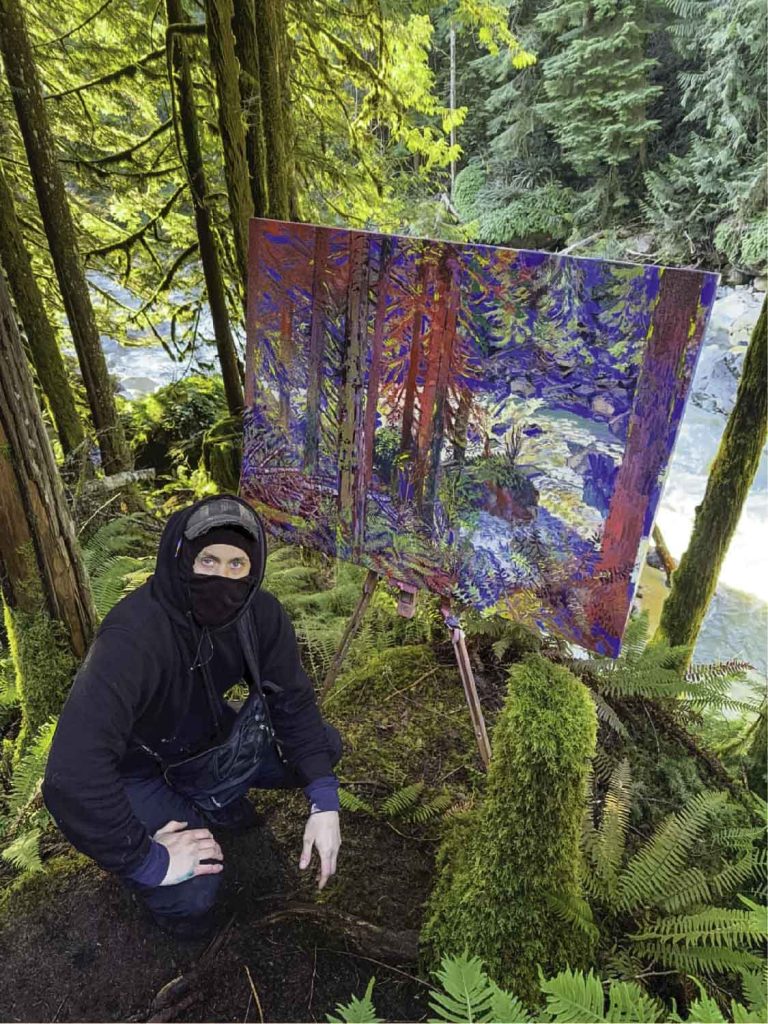 I contend with a different reality. The Skagit Valley is gentrified; the Cascades represent the last fringes of wilderness. My desire to live and work in the mountains is directly tied to that tension. I’ve turned my vehicle into a mobile version of the Craft Island legacy—not by replicating their lifestyle, but by evolving it under modern pressure.
We live at the edge of an ocean and untouched peaks. We are rich in beauty, yet I feel most grounded when I turn toward the unseen—the difficult, the remote—to tell my story. Years painting abroad in Mexico only sharpened my sense of obligation to the Pacific Northwest. Culture moves in waves, and the true history of the Valley will be written in the next forty years as we drift further from its origins.
I intend to be part of that story—ensuring that the raw, uncompromising spirit of Northwest artistry not only survives but thrives.
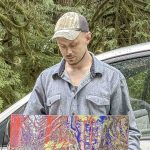 Benjamin Vanderwerff is a Pacific Northwest plein-air painter based in Washington’s Skagit Valley. Working primarily in large-scale acrylic and spray paint, he creates his paintings entirely on location throughout the Northwest. His work explores the region’s remote landscapes through physical immersion, combining contemporary abstraction with the tradition of Northwest landscape painting.