AdventuresNW



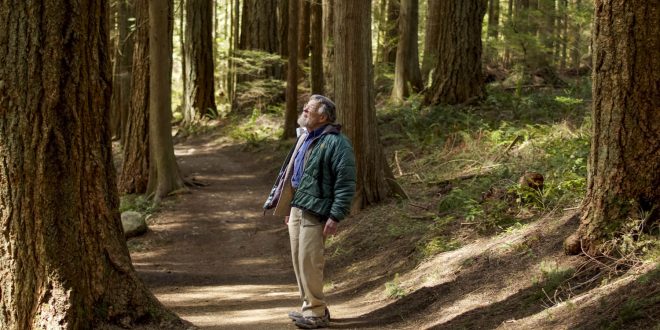
Perhaps no single individual in the history of Whatcom County has done more to conserve the open spaces in our corner of the state than Rand Jack.
One of the founders of Whatcom Land Trust in 1984, he led the efforts to preserve such well-known (and much beloved) places as the Stimpson Family Nature Reserve, Teddy Bear Cove, Point Whitehorn, Lily Point, and Governors Point.
“My hope is that our great, great grandchildren will still enjoy the benefits and honor the interdependence of the relationship.”
In recognition of this lifetime of conservation service, the Whatcom County Council voted in August to name a trail in the Canyon Lake Community Forest the Rand Jack Trail. The 3.5-mile-long trail is the main access route at the Community Forest, a 2,200-acre nature reserve that includes placid 45-acre Canyon Lake, a magnificent old-growth forest of thousand-year-old trees, and soul-stirring views of Mt. Baker. The Forest is home to bears, cougars, bobcats, deer, owls, pica, and more. Vehicle access to the Forest is currently unavailable due to a road washout back in 2009.
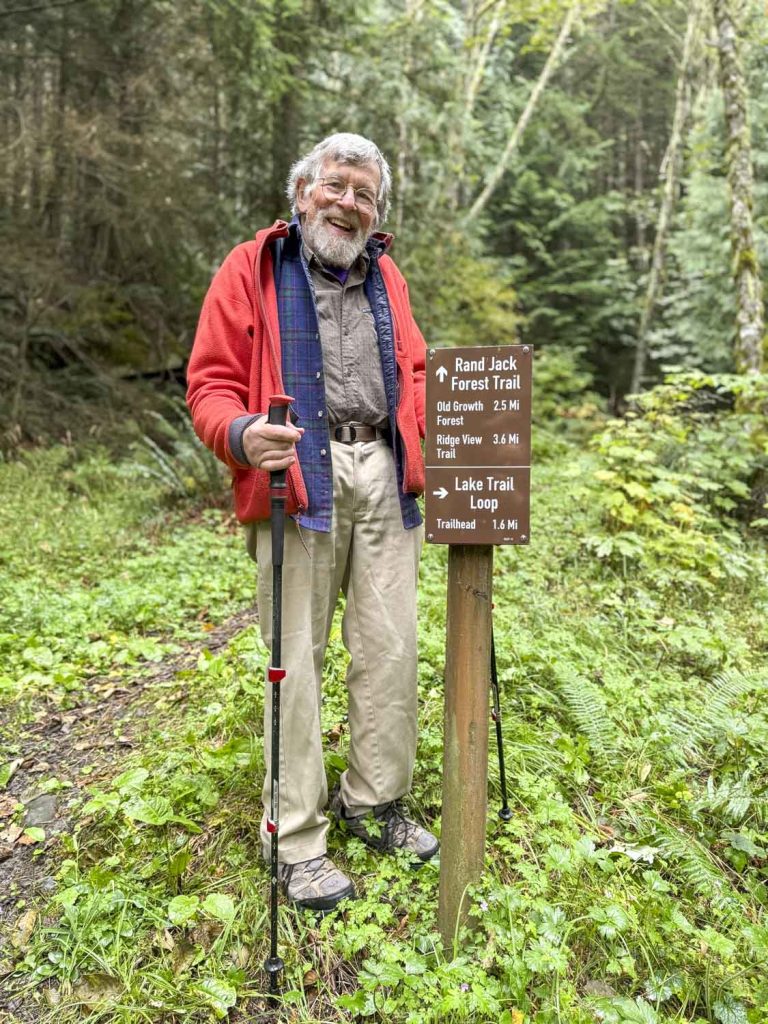
Jack led the conservation efforts to turn Canyon Lake into parkland in 1993, when he facilitated a complex land exchange between the Washington State Department of Natural Resources, Trillium Corporation, and Crown Pacific to create the Community Forest. To finance the land purchase, Jack sought support from the Seattle-based Paul Allen Foundation, bringing a Foundation representative to see what he called the “cathedral of ancient trees” at Canyon Lake. The visit paid off, and the Foundation donated $1.8 million toward the eventual purchase.
“Becoming a conservationist sort of crept up on me,” Jack says. “More of an awakening than an inspiration. Whatcom County’s abundance of magnificent waterbodies, forests and mountains provided the catalyst.”
For the past 50 years, Jack has been instrumental in the protection of nearly 20,000 acres of land in Whatcom County, a legacy described by County Executive Satpal Sidhu as having “greatly contributed to Whatcom County’s reputation as a premier destination for those seeking to experience the outdoors.”
“Protecting open spaces, wild lands and natural ecosystems provides us many practical benefits—recreation, exercise, health, clean air and water, a livable climate, visual delight, escape from daily toils,” Jack says. “But I believe that there is a deeper, more mysterious benefit. Conserving special Whatcom places reminds me that it is not a ‘Me – It’ relationship, but a ‘We’ relationship. We are part of the natural world, and the natural world is part of us. The relationship is interdependent. If we do our part to protect and nurture natural systems, they will do their part to sustain us.
“My hope is that our great, great grandchildren will still enjoy the benefits and honor the interdependence of the relationship.”