AdventuresNW



There’s a particular kind of person at the gate for a fourteen-hour flight. They have one small bag, they’re wearing something soft and dark, and they look neither excited nor anxious. They’ve done this before, and they’ve reduced the whole thing to a system. The system isn’t complicated, but it’s different from how most people pack, because it’s built around the flight itself, not the destination.
The Cabin Bag Is the Only Bag That Matters
Frequent flyers treat checked bagage as a separate problem and focus on the bag that goes under the seat. It should be soft-sided, so it squashes into the space, and it should be organized so that nothing needs to come out of the overhead locker once the seatbelt sign is on. The things needed in the first hour go in the top; the things needed in the last hour go in a separate pouch.
A second, smaller pouch holds the things that go in the seat pocket: earphones, lip balm, a pen for the landing card, the phone charger. Everything else stays zipped.
What Goes In
Layers first. The cabin is warm at boarding and cold at cruising altitude, and the only way to manage that change is clothing that goes on and off. A large scarf or wrap that doubles as a blanket is the frequent flyer’s most reliable item, since airline blankets are thin and often unavailable. Compression socks for flights over six hours. A pair of fold-flat slippers or thick socks for walking to the toilet.
Then the small comforts. An eye mask that blocks light properly, which most free ones don’t. Earplugs or noise-cancelling earphones. A refillable water bottle, empty through security and filled at the gate. A toothbrush and a small toothpaste. A moisturizer, because cabin air dries skin within hours. A few snacks that don’t need refrigeration, since meal timing rarely matches the appetite.
Wear The Right Thing
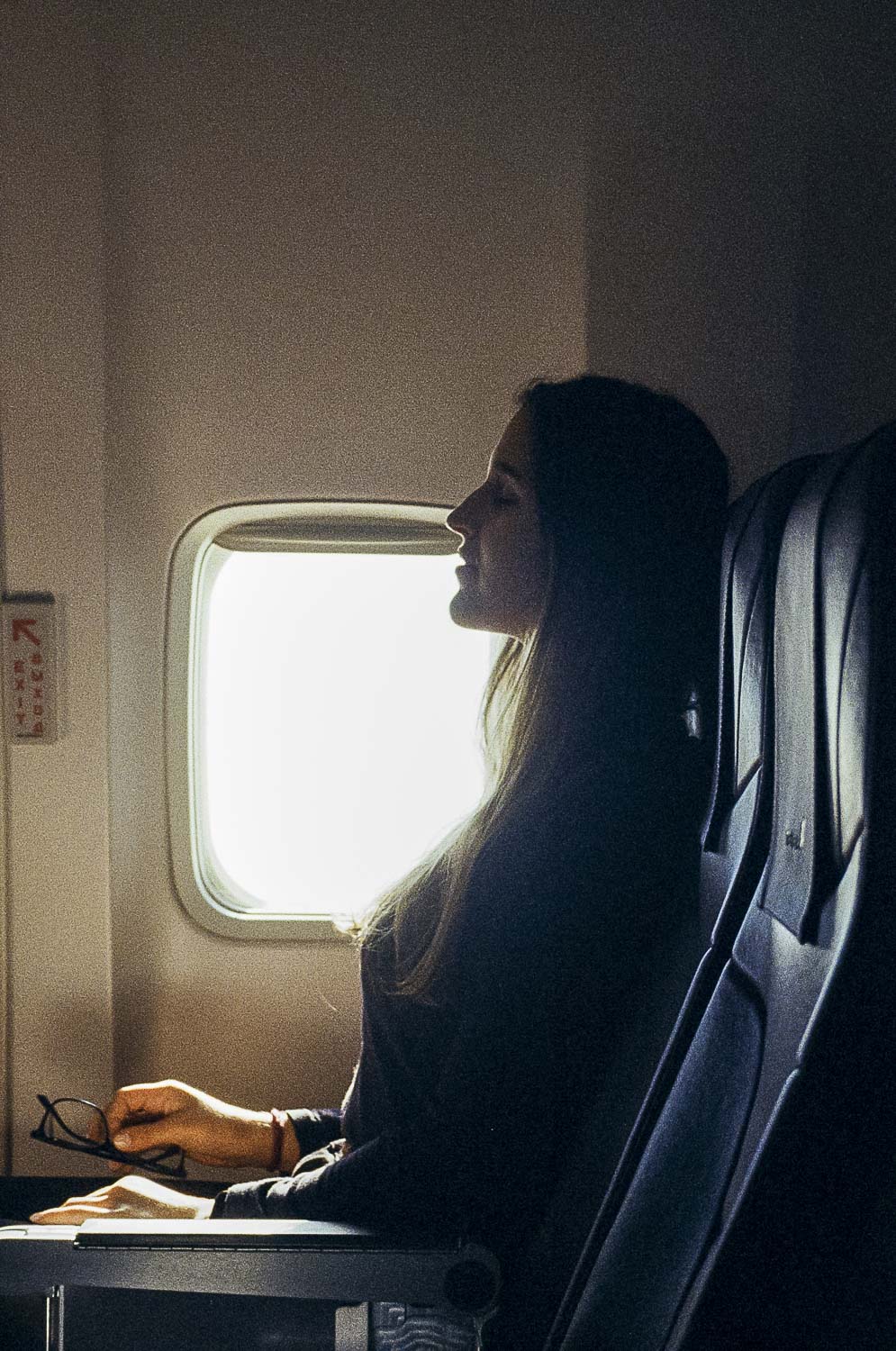
Clothes worn onto the plane are part of the packing. Soft trousers with a defined waist, a fine long-sleeved top, a layer that comes off, and shoes that slip on and off without laces. Dark colors hide the inevitable. Natural or regenerated fibers breathe; polyester doesn’t and will feel unpleasant by the second meal. Most of the pieces that work are the ones that would be worn for an evening at home, chosen in their plainest colors, and anyone building a travel outfit from scratch can discover relaxed clothing essentials that do both jobs, since the difference between loungewear and flight wear is mostly the color.
Nothing with a belt. Nothing that creases. Nothing that sets off the scanner.
The Sleep Kit
Long-haul flights are the one journey where sleep is part of the plan, and the frequent flyer packs for it. Beyond the mask and the earplugs: a neck pillow that’s actually been tested, since most are useless and the inflatable ones are the worst; a wrap that covers the shoulders; a change into something softer once the meal’s cleared, if the outfit allows. Some people bring a small pillowcase to put over the airline pillow. It sounds fussy but it works.
The timing matters as much as the kit. Setting the watch to the destination time at boarding, eating and sleeping on that clock, and refusing the second meal if it falls in what’s now the middle of the night gives the body a headstart on the new time zone.
The Landing Pouch
This is the thing that separates the practiced from the rest. A small bag, reached for in the last hour, containing a toothbrush, face wipes or a small cleanser, deodorant, a comb, moisturizer, and a fresh top. Ten minutes in the toilet before descent, a change of the base layer, and the person who walks off the plane looks as though the flight was shorter than it was. It also makes the arrival hall, the taxi and the first hour at the destination considerably more pleasant.
A small notebook and a pen earn their place too, for the landing card, the address of the hotel and the things that occur to a person with fourteen hours and nothing to do.
Documents And Devices
Passport, boarding pass, and any visa paperwork in one place, reachable without unzipping the main bag. A photograph of the passport on the phone. Chargers and a small power bank, since seat power is unreliable. Downloads done at home: films, podcasts, the destination’s map, because in-flight Wi-Fi is expensive and often absent. Headphones with a wired option, since some seatback systems still need them.
What Frequent Flyers Don’t Bring
A large hard cabin case that has to go in the overhead compartment. A laptop bag as a second item, which most airlines now count. Heavy books. Anything liquid over 100ml, obviously, but also anything liquid that isn’t essential, because the bag gets searched. Jewelry that needs removing at security. And any assumption that the airline will provide what’s needed.
Key Takeaways
Pack the under-seat bag for the flight and the checked bag for the destination, and keep them separate in the mind as well as the luggage. Layers, a wrap, compression socks, and slip-on shoes on the body; a sleep kit, a landing pouch and the small comforts in the bag. Wear the plainest version of the softest clothes owned. The whole thing fits in a bag that squashes under the seat, and once it’s done twice, it’s a system that never changes.