AdventuresNW




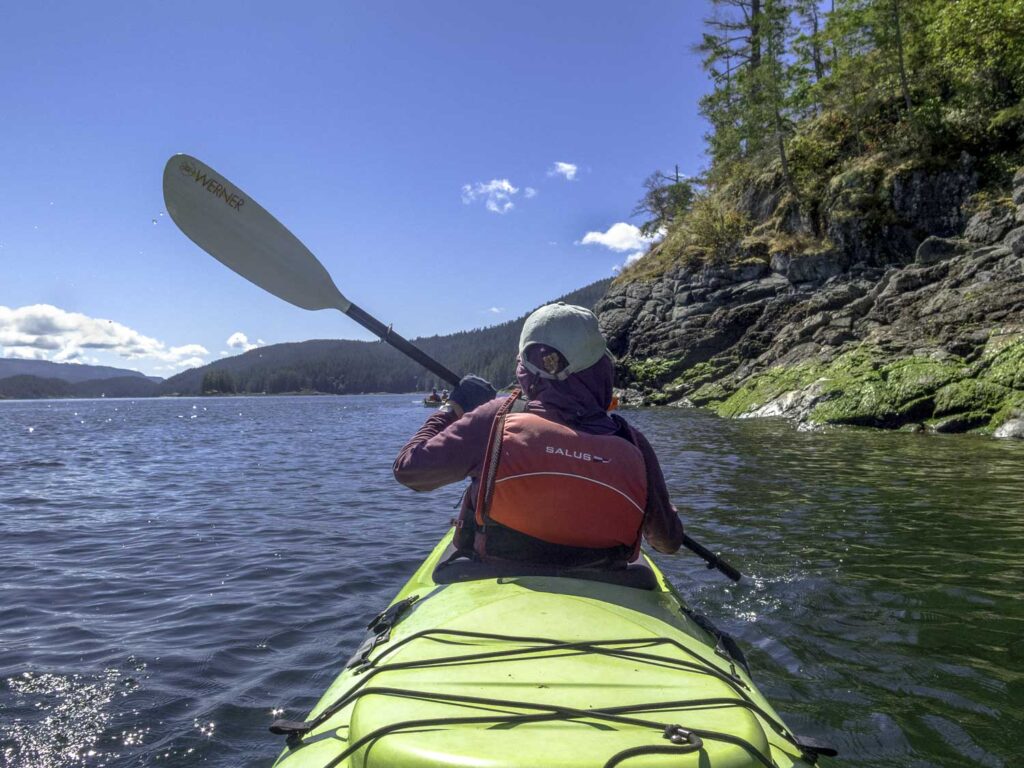
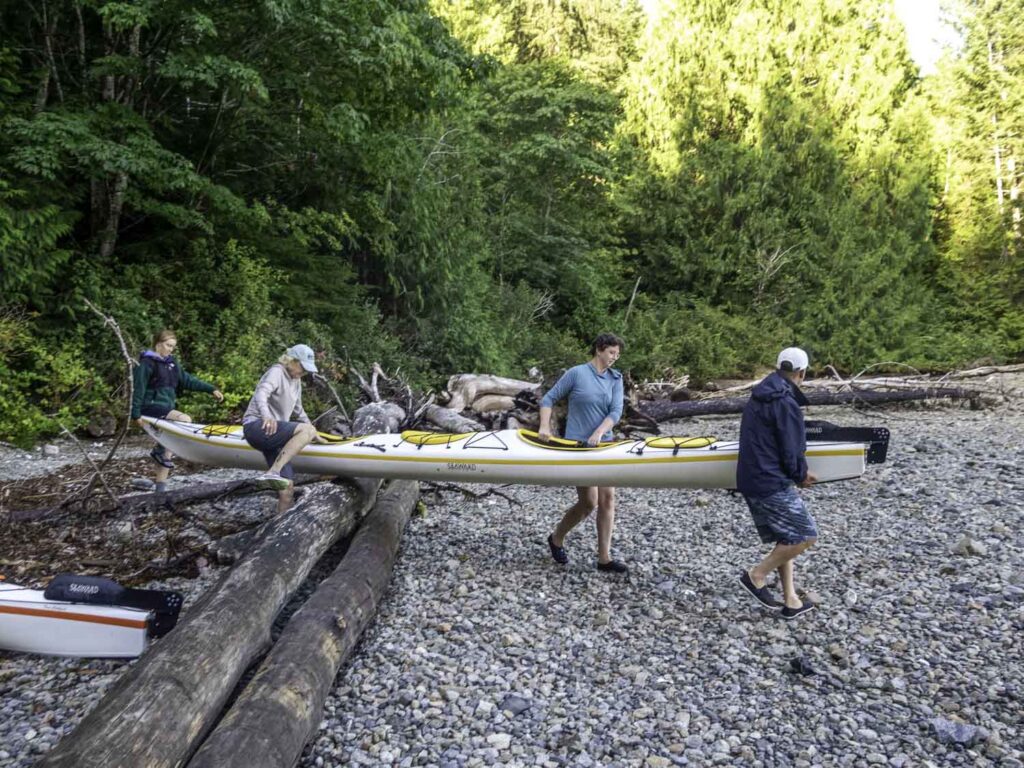
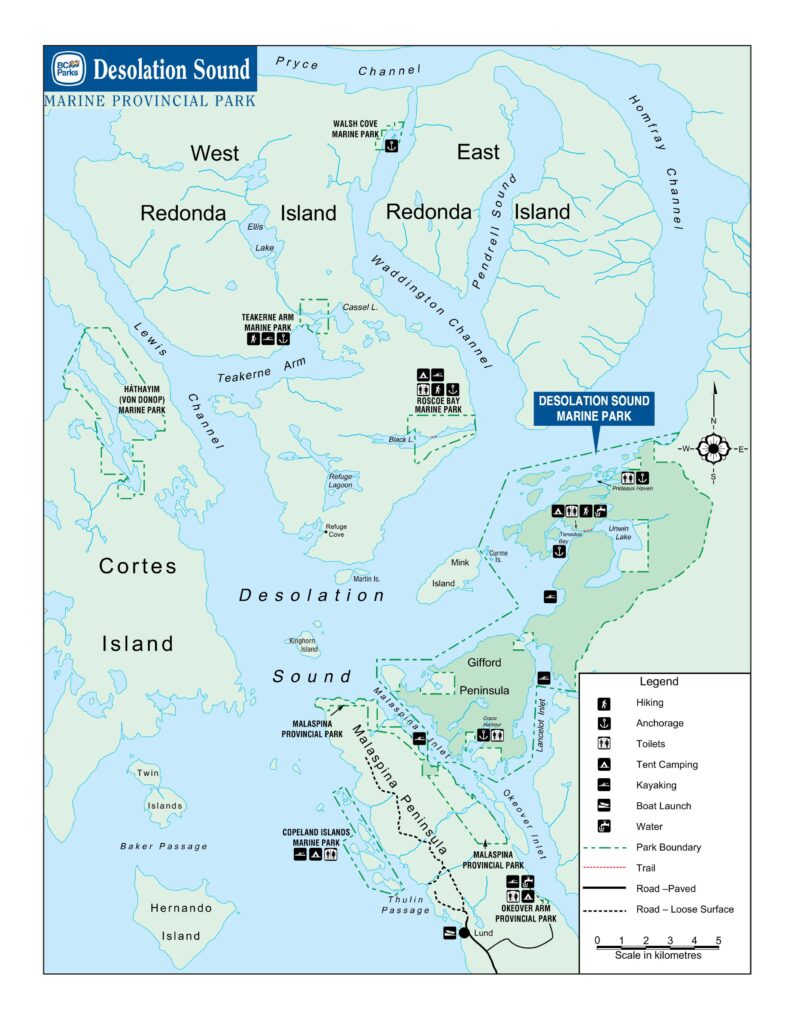
18 -20 mph winds and three to four foot swells met us as we paddled our kayaks out of Lund Harbor heading north. Waves sloshed over the boats, and, even though we had skirts and rain gear, they soaked us. Steering was next to impossible. Our intrepid group of seven was just beginning a trip to Desolation Sound with the Lund, BC kayaking company Footprint BC, and the four days of this trip were not looking as enticing as they had when we signed up.
The repetitive nature of paddling, as with many outdoor pursuits, lulls the mind and allows it to empty itself of distant plans and concerns.
Desolation Sound is at the north end of the Sunshine Coast of British Columbia, east of Cortes Island. When George Vancouver entered the Sound in 1792 on a surveying expedition, he stated: “This Sound afforded not a single prospect that was pleasing to the eye, the smallest recreation on shore, nor animal or vegetable food.” Likely looking for available land to use as pastures or farms, he subsequently gave the Sound its discouraging name when he instead found thin and rocky soil and shorelines of steep granite.
The resident indigenous tribes of the Tla’amin, Klahoose, and Homalco First Nations undoubtedly disagreed. The Sound has abundant food sources, including shellfish, salmon, and a variety of other fish, sea otters, sea lions, seals, dolphins, porpoises, and whales, as well as terrestrial wildlife, including bear (black and grizzly), deer, cougars, wolves, mink, raccoons, and rodents. Bird life is also abundant: seabirds, osprey, bald eagles, herons, oystercatchers, sandpipers, kingfishers, ubiquitous ravens, crows, and more. The forest also provides cedar for multiple uses, Douglas fir, hemlocks, and bigleaf maples, as well as a variety of plants and berries for consumption. And because the Sound is in the rain shadow of Vancouver Island, the climate is generally mild and hardly desolate. Currently, humpback whales and transient orcas are making a resurgence due to the recovery of otter and sea lion populations, and the sea star population is recovering as well.
After exploration by Vancouver and others, Europeans populated the Sound. They hunted, trapped, fished, and logged the area. It has been a refuge for US Vietnam-era draft dodgers, who built communities still occupied today. More recently, it has served as a renowned kayaking and boating destination, the beginning (or end) of the Sunshine Coast hiking trail (112 miles long), with scattered eco-resorts, shoreline estates of the wealthy, and artist communities.
Drawn by the west coast scenery and nearly endless outdoor activities, Footprint BC’s owners and operators, John Hermsen and Christy Krebber, first visited the Sunshine Coast from the Netherlands in 1999. The Pacific Ocean, combined with the dense temperate forest and massive mountains, especially appealed. Relocating in 2006, they started Footprint from scratch and built it to what it is now. They specialize in customized guided day and multi-day Sea Kayak Tours and professionally instructed Paddle Canada Courses. Their customized tours reflect their passion; excellent and well-maintained equipment, knowledgeable, competent, and personable guides; and delicious food (don’t think backpacking chow).
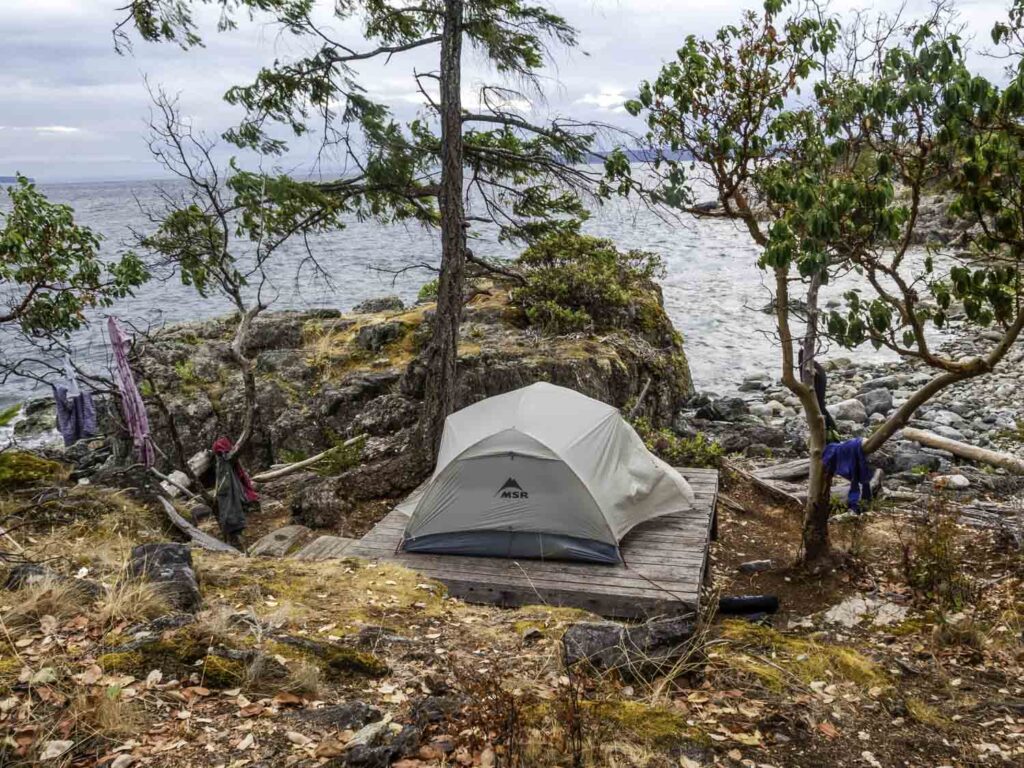
Sonje, our Footprint guide, eventually led us out of the strong winds into a quiet cove on the Copeland Islands for lunch, and when we resumed paddling in the afternoon, the wind and waves were much calmer. Even though it was cloudy and drizzly, at this point we were able to appreciate the beauty of the area’s rocky islands and start to relax into the rhythm of paddling. The muted light emphasized the never-ending layers of islands and made the madronas glow red. North Copeland Island served as our camp the first night (complete with a dinner of Indonesian Nasi Goreng with peanut sauce) courtesy of the BC Parks marine campgrounds. There are many of these campgrounds scattered around Desolation Sound, providing level wooden tent platforms over rocky granitic ground. These platforms also help protect fragile lichens and moss on the forest floor. Each campground had been remarkably well-maintained with latrines: toilet paper and hand sanitizer provided. One might surmise that their park service seems to be better funded than ours in the States.
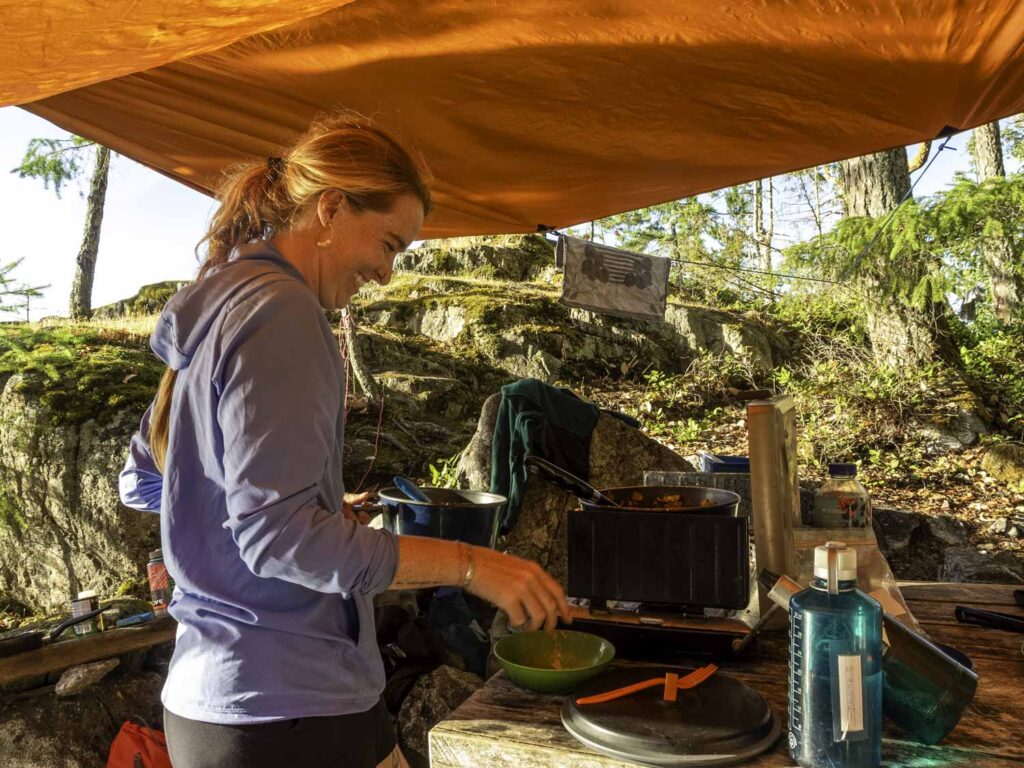
Our second day started with a rainy paddle around Sarah Point to Feather Cove, at the north end of the Malaspina Peninsula. This was to be our home base for two nights. Now officially in the Sound, we had views north and east toward enticing inlets with cloud-covered mountains rising in the distance. The glacially carved Sound has the greatest elevation drop from mountain to sea floor of anywhere in North America, creating unbelievable fjords. Our campsite presented an opportunity for a short hike up to the ridge to a bald, providing excellent northern views to peaks and fjords, only visible during a brief respite from the rain. As forecasted, an evening thunderstorm rolled in a bit later, providing excitement. Fortunately, by that point, we had our tents up, and Sonje had strung a tarp to help keep her dry while preparing our evening meal.
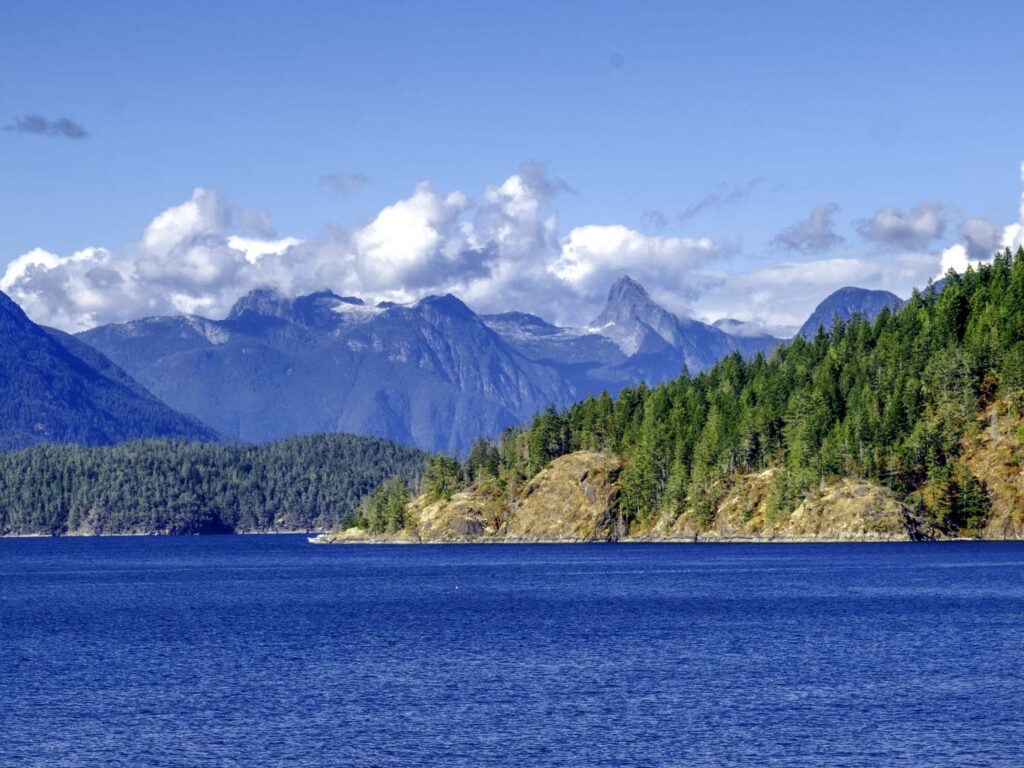
On the third morning, we awoke to blue skies and views of the distant mountains that had been taunting us. Paddling south close to the shoreline, we enjoyed viewing the purple and orange sea stars and leather stars, green urchins, and sea cucumbers. Grace Harbor, with its abundant Moon jellyfish swept into the harbor by currents, was our lunch destination, complete with a short hike to a freshwater lake to swim in. As we left the area, we paddled by a small island used for aerial funeral ceremonies by Indigenous tribes. At the end of the day, back at Feather Cove, the warm waters of the Sound tempted some of us to swim. These waters are the warmest north of Mexico because the Sound is located midway along Vancouver Island, where the currents from north and south meet. But they are minimized by the distances from the ends of the island. The shallow bays in this region can heat up to 75 degrees in the summer.
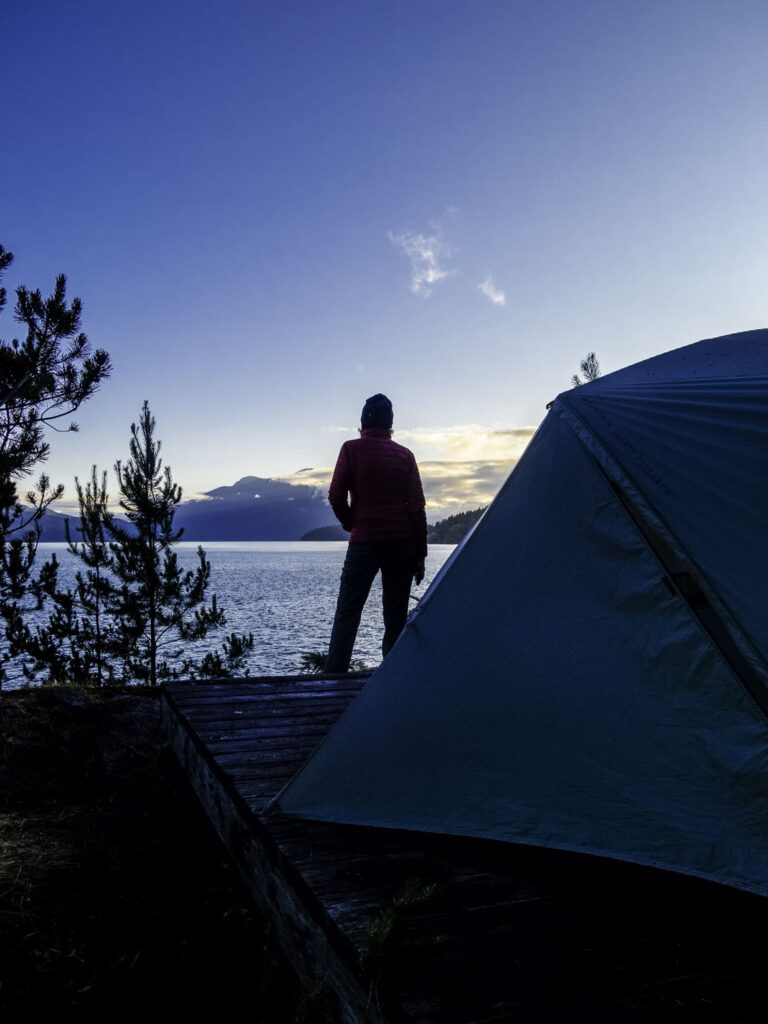
On our final morning, we paddled south back to Lund, telling riddles and singing along the way. The snowy peaks of Vancouver Island were clearly visible, and the calm waters allowing us time to reflect on the trip. The repetitive nature of paddling, as with many outdoor pursuits, lulls the mind and allows it to empty itself of distant plans and concerns, and instead fills it with a deep appreciation of the surroundings.
The sights around us filled us with gratitude for the opportunity to explore the area; Canada has so much to offer in terms of natural beauty and open, uncluttered spaces, as well as majestic cities. We must remember that we have a longstanding partnership with our northern neighbors, and for centuries, we have lived in harmony and equilibrium. Now, during these challenging times, we need to show friendship and support to our Canadian neighbors rather than antagonism. We are only individuals, but our respectful presence can go a long way to healing larger wounds. Make plans to visit and explore all that Canada has to offer!
 Cathy Grinstead, born and raised in Northern California, spent her summers backpacking in the Sierra. In 2018, she retired from veterinary practice and moved to Bellingham to explore a different part of the world. She enjoys hiking, outrigger paddling, and snow sports, and loves all that Bellingham has to offer!